
How to Start a Bookish Mail Club: Step by Step
There’s a particular quiet that settles over a mailbox these days. Bills, coupons, a catalog from a store you visited once, the same old stuff. But what if something new arrived every month, in an envelope with real handwriting on it, carrying a story to tell? It sounds both different and exciting.
In 2026, letter writing is having a revival, and bookish mail clubs are a charming part of it. Being part of one is a good way to stay grounded, step away from the digital world, and give yourself something to look forward to every month. But what if you had a story to tell and wanted to start one yourself? I’ve done the research and put it together in the steps below, in the most time-saving and cost-effective way.
Step 1: Choose a Theme for Your Content Letter
Your monthly content letter is the main item you’ll mail. Keep it to one or two pages. It can feature a serialized fiction story, a newsletter from a fictional town, reproductions of historical letters, poetry, or personal updates from you as the sender. Choose whatever feels fun to you and whatever you think readers might find interesting. It doesn’t need fancy artwork or fancy paper to start.

Step 2: Gather Your Circle: Start as a Hobby
The best way to build an audience is to start small and treat it as a hobby, even if you plan to make money from it eventually. Think of three to six people who would enjoy receiving and reading your letter. The best first members are people you already know: the college friend who moved away, your sister, the coworker who always has a paperback in her bag. Letters to someone you know start warm instead of awkward, and you aren’t handing your home address to a stranger.
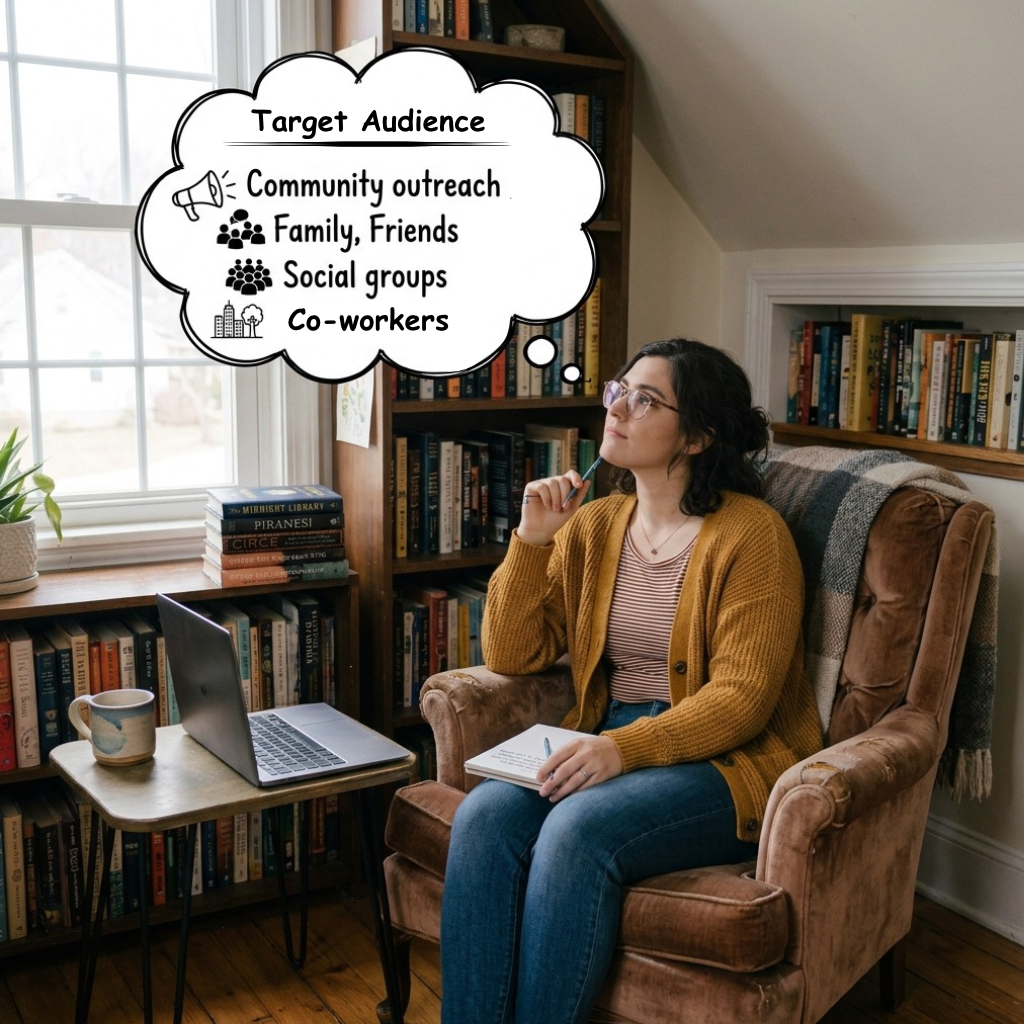
Writing advice for finding pen pals says it’s safer to start with someone you know, and that a P.O. box can protect your privacy if you write to people you’ve only met online. If you want to meet new people, look local. Some stationery shops run monthly letter-writing nights, and some bookstores have programs that pair readers to write to each other about books. Your own bookstore might be open to the idea, especially as you grow.
Step 3: Build Your Content Letter and Mail Package
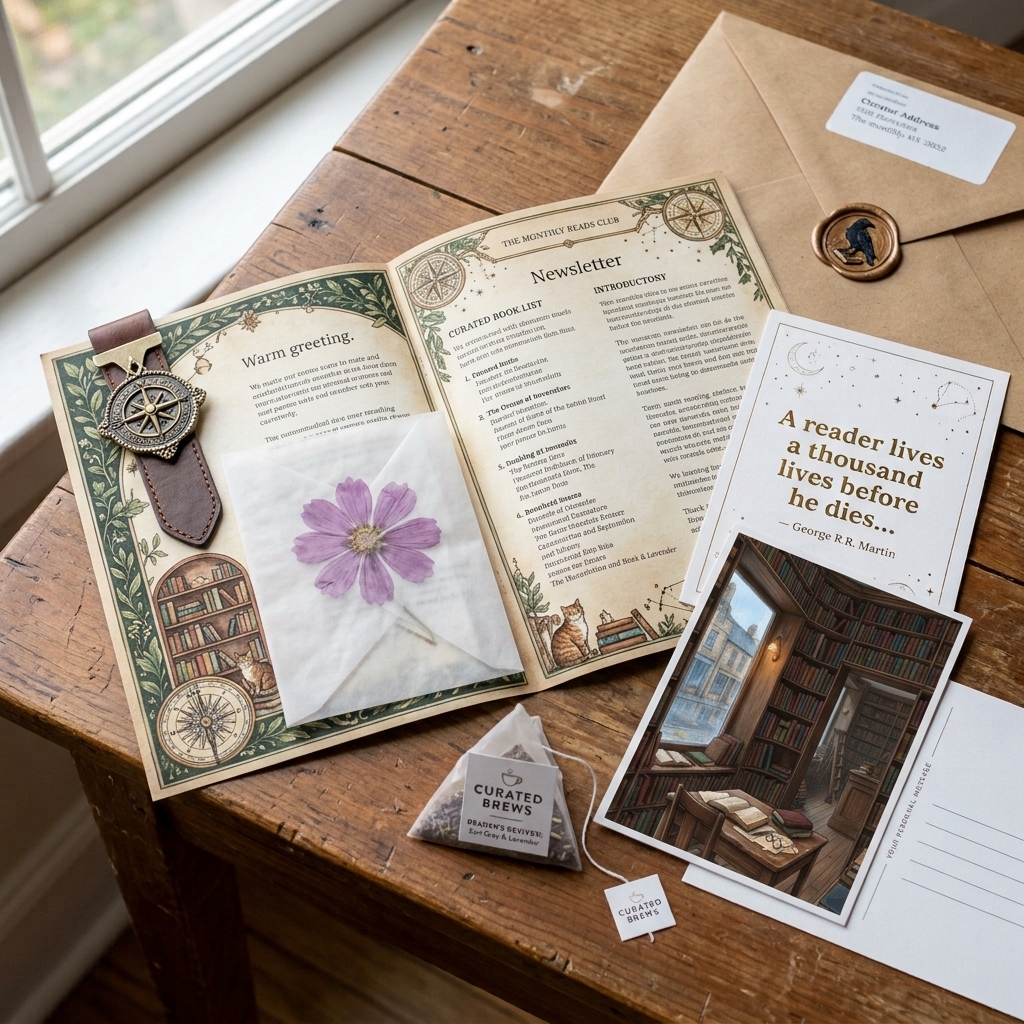
The letter is the heart of it, but a flat little extra turns an envelope into an event. Keep it light so it doesn’t push you over an ounce, and consider adding a few extras such as:
A bookmark
A pressed flower or leaf from a town related to the story
A tea bag, so the reader can enjoy a cup while they read
A quote card related to the letter
Printed art related to the letter (a photo, greeting card, or postcard)
If you’d like a card in the mix, we makes high-quality, literary-themed greeting cards. Click here for our Greeting card lineup
Step 4: Set a Rhythm You Can Keep
Once you’ve decided what will go into your monthly mailing, there are a few ways to run a club, and none of them is wrong. Pick the one that fits you and your audience:
The Letter Circle. Everyone writes to everyone else each month. It’s the most personal and costs the most in stamps.
The Round Robin. One envelope travels around the circle. Each member adds a page and mails it to the next person. It’s cheap and charming, but slower, and you need people who won’t let it sit on a desk.
The Book Rotation. One book travels in a set order, with each member mailing it on to the next on a set date. Tuck in a notebook so everyone can leave notes in the margins of the conversation.
If you can’t decide, start with the Letter Circle. It’s the simplest, and you can change it after a few months.

Step 5: Learn the Postage (Before the Post Office Teaches You)
This is the unglamorous step, and it saves you money and trouble.
Stamps. A Forever stamp went from 78 cents to 82 cents in July 2026. That covers a standard one-ounce letter. In a Letter Circle of five, writing to the four other members takes four stamps a month, about $3.28. Check the current price at USPS before you stock up, or print your own postage with Stamps.com. A thick letter with extras can run past one ounce, so weigh it at home before you seal it.
Weigh Your Packages Ahead. Media Mail is the cheapest way to send a book, but it has a rule that catches people out. You can’t put a personal letter in a Media Mail package. USPS is allowed to open and inspect it, and a package with a letter inside can be charged the full regular rate. The fix is easy: mail the book on its own and send your letter separately in a stamped envelope. For a light paperback, also compare Media Mail to First-Class, since packages under eight ounces can cost more with Media Mail, its best to keep a small digital scale around to weigh your packages ahead.
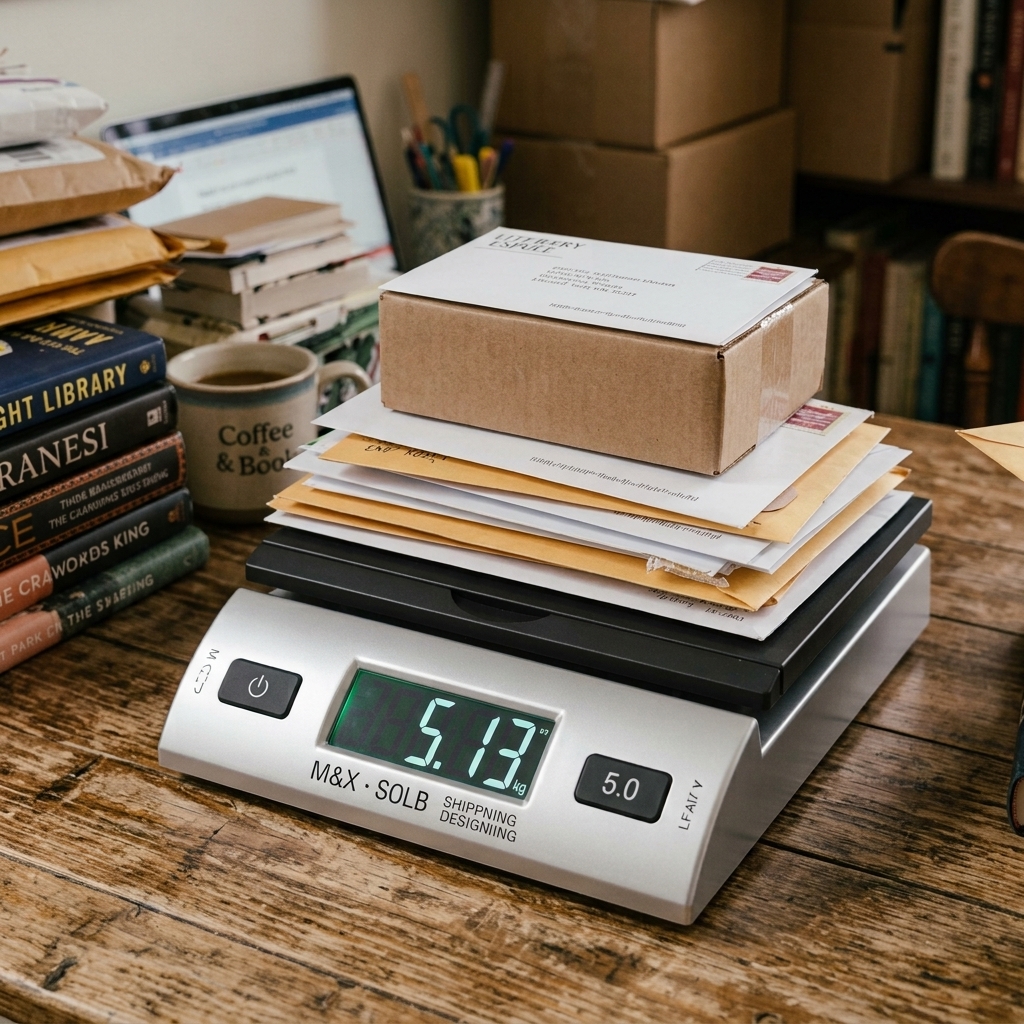
Click here for the Scale in the photo
Step 6: Keep a Few Prompts Nearby
The blank page is what kills most letter habits. Author Rachel Syme, whose book Syme’s Letter Writer is a guide to modern correspondence, suggests starting with a writing prompt. Here are six to copy into your club’s first letter:
The last line you underlined, and why it stayed with you
A character you’d want as a neighbor
A book you pretend to have read, and what you’ve actually read of it
A room from a book you’d move into tomorrow
Where you read this month, and what the light was doing
One small thing that happened this week, written as if it were a chapter
Good paper helps the letter feel genuine and worth finishing.
Step 7: Keep the Club Alive Past Month Three
Most clubs fade around month three, once the novelty is gone and the first stack of letters has been answered. A few things help:
Gather your audience’s reading lists. Send each person a digital reading tracker and ask them to keep track of what they’re reading and email it back three months later, so you can see what they’ve finished and have something to write about. Feel free to tell them it’s for survey purposes and helps you keep your content fresh. My free Digital Reading Tracker works well for this, click here to have it emailed over to you.
Give months a theme. December could be winter reads, and January could be a book you’ve been avoiding.
Check in at three months. Ask for the reading trackers, then send your audience a survey to find out what’s working and whether you need a new format. It’s easier to adjust early than to let someone quietly drop out.
Let it end when you outgrow it. Syme points out that every correspondence eventually comes to an end, sometimes after months and sometimes after years. A club that runs for a year and leaves everyone with a box of letters has done its job. If you build a brand around your mail club over the years, you may find you have a following and products or services beyond the club, and you may outgrow it. Whatever the reason, it’s not a bad thing to let it end with a period or a “to be continued...”

Final Thoughts on Your First Envelope
You don’t need a perfect plan to start. Choose your content, pick two friends, choose a date, and write your first letter this week. The rest takes care of itself, one stamp at a time.
If you start a club, I’d love to hear about it!
~ Sam, Founder of Bit of Ink
Letters from the reading chair
A monthly note with quiet essays, book recommendations, and small pleasures for the reading life. No noise, ever.