
How to Style a Dark Academia Bookshelf That Looks Inherited, Not Bought
I can always tell when a bookshelf was bought in a weekend.
The spines match too well. The colors are coordinated like a paint swatch. Everything is facing the same direction, at the same height, with the same amount of space between each title, like the books were arranged by someone who has never actually pulled one down to read it at 1am. A real bookshelf doesn't look like that. A real bookshelf looks like it happened to you over years, not like you ordered it. That's the whole difference between a shelf that looks dark academia and a shelf that looks like a stock photo of dark academia. One looks bought. The other looks inherited. Here is how to get the second one, even if you started collecting your books last Tuesday.
Stop Buying Books to Match. Start Buying Books You'll Actually Reread.
The fastest way to make a shelf look fake is a stack of hardcovers bought in matching colors because they photograph well together. It works for one picture. Then it just sits there, uncracked, looking exactly as staged as it is. An inherited shelf has books you've read twice. The paperback with the cracked spine. The hardcover you splurged on because you loved the story enough to want a nicer copy. Buy for the reading, not the photo. If there's one book you already love enough to reread, that's the one worth upgrading.

Click here for the Pride and prejudice book in the photo
Let the Editions Be Mismatched
Every real collection has a Penguin Classic next to a random secondhand hardcover from 1974 next to a paperback with a completely different cover from the other copy of the same book you also own for some reason. That inconsistency is the tell. Matching editions say "I bought a set." Mismatched ones say "I didn't care whether it matched, because I cared what was inside it." If you're starting from nothing, don't buy a boxed set. Buy one title at a time, from wherever you find it. And once you've got a shelf full of odd editions, mark them as yours the way collectors always have. A small wax seal pressed into the cover, even on a book you bought last week, makes it feel like something you've owned for years, not something you picked up on the way home.

Click here for the Wax seal stamp in the photo
Add the Object That Has Nothing to Do With Books
Every shelf that looks inherited has one thing on it that isn't a book. Not a matching bookend set. One object. A small brass compass someone gave you. A pressed flower in a frame. A chipped ceramic bust that doesn't match anything else in the room but has been sitting in that exact spot for three years. The object doesn't need to make sense. It just needs to be yours. This is the detail that separates staged decor from an actual life. Stock photos never have the object that only makes sense to the person who owns it.
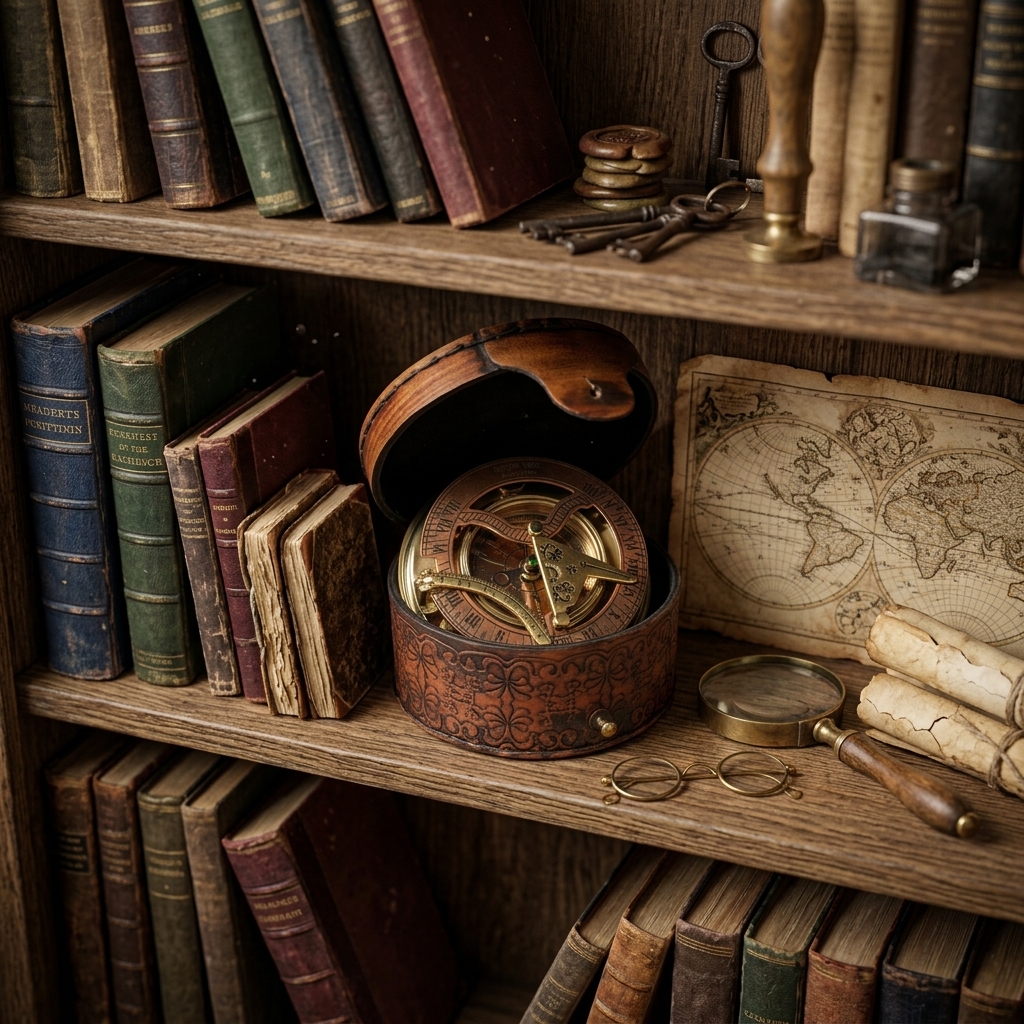
Click here for the Antique sundial compass in the photo
Stack Some of Them. Don't Shelve Everything Upright.
Perfectly upright, perfectly spaced books are the fastest way to look like a furniture showroom. Real shelves have stacks. Books lying on their sides because there wasn't room to shelve them upright, or because you pulled them down to reread the ending and never put them back properly. Let a few stacks happen. Put one at an angle. Let a book lean against another one instead of standing perfectly straight. This is the visual equivalent of a shelf that's actually used, not one that was arranged once and then never touched again.
What to Add When You Don't Have Enough Books to Fill The Shelf
If your shelf isn't full yet, don't rush to fill every gap with more books you haven't read just to make it look complete. A set of bookends styled to look like stacked books can hold the space instead, giving the illusion of a fuller collection while you build the real one slowly. From a few feet away, nobody can tell the difference, and up close, it just reads as one more stack among the rest. Every shelf that's been collected over years has one thing on it that has nothing to do with reading. A vintage inkwell and quill set tucked into a corner. Something that doesn't serve any purpose except that it's been sitting there for years and conjures the sense of a person who writes as much as they read. This is the detail that separates a real shelf from a styled one. Stock photos never have the object that only makes sense to the person who owns it.
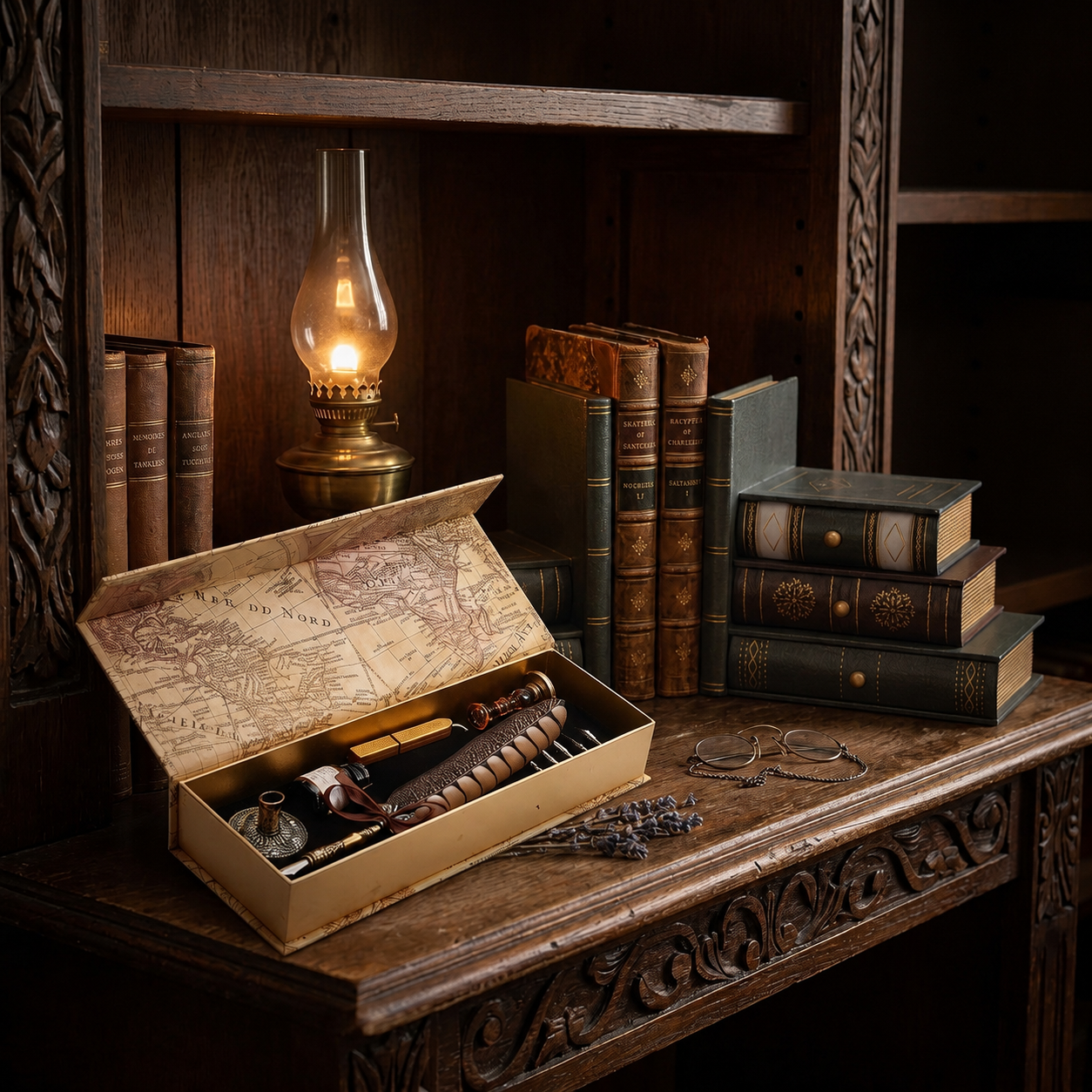
Click here for the Book-shaped bookend set in the photo
Click here for the Vintage inkwell and quill set in the photo
Fill the Gaps with Character, Not Just More Books
Every shelf that's been collected over years has objects that have nothing to do with reading, sitting there because they belong, not because they were placed. A vintage journal with worn, softened pages, turned so the edges face outward instead of the spine, does something a straight row of books never can. The uneven, aged paper catches the eye first, and it reads as history before anyone even asks what's inside it. Pair it with something that has real weight to it. A small bust, like a weathered head of David, sitting a shelf above or beside the journal, gives the whole corner a sense of scale and permanence. The classical stone next to the soft, worn paper is a contrast that works because neither one is trying to match the other. That's the whole point.

Click here for the Brown leather journal in the photo
Click here for the David bust statue head in the photo
One Shelf Can Be Slightly Empty
Every full, perfectly packed shelf looks intentional in a way that reads as store display. Real collections have one shelf that isn't quite full yet, with a little room left for whatever you're about to read next. Leave the gap. Don't rush to fill it with a decorative object just to make the shelf look complete. An unfinished shelf is proof that the collection is still happening, which is exactly what makes it feel alive instead of staged.
Track What You're Building
If you're going to spend years assembling a shelf that looks like it happened to you, it's worth keeping some record of how it happened. What you read, when you read it, what you thought of it before you forget. We made a reading tracker for exactly this. Download our free Dark Academia Reading Tracker and start keeping the record now, so that in a few years your shelf has a story attached to it, not just a collection of spines.

Click here to download our FREE dark academia reading tracker
A Bought Shelf Impresses People for Five Minutes. An Inherited One Makes Them Want to Stay and Look.
The whole difference comes down to this: a matching, curated, symmetrical bookshelf says "look what I bought." A mismatched, slightly stacked, slightly worn one says "come sit down, I want to tell you about this one. "Buy less at once. Let it accumulate. Keep the ugly bookends. Leave the gap on the shelf. That's the whole method, and it's the only one that can't be faked in a single weekend.
~Sam / Bit of Ink
Letters from the reading chair
A monthly note with quiet essays, book recommendations, and small pleasures for the reading life. No noise, ever.