The Victorian-Inspired Weekly Planner That Changed How I Manage My Week
I used to think I was just bad at planning.
Every Sunday, I'd open a blank planner, or sometimes just stare at my Notes app, and think about the week ahead. I'd jot down a few things. Books I wanted to read. Work deadlines. Maybe a coffee date. Then by Wednesday, none of it mattered anymore. The page felt like a lie. I'd forgotten what I'd written. Or I'd written too much and felt paralyzed by choice.
I was drowning in apps. Google Calendar. Notion. Three different planner notebooks. Each one promised to be the system. Each one made me feel more behind.
That's when I started thinking differently.
How Did They Do It?
I found myself wondering: How did people plan their lives two hundred years ago?
They didn't have infinite apps. No color-coded digital calendars. No productivity gurus telling them to time-block every fifteen minutes. Yet somehow, scholars and writers and thoughtful people managed their weeks. They tracked their reading. They prioritized what mattered. They got things done.
They wrote things down. On paper. Simply.
And they likely weren't overwhelmed.
I realized the problem wasn't that I needed more systems. I needed less. I needed to get back to basics, to the elegance of writing down only what actually matters.
Simple and Basic Is Better
That's when it hit me: What if I kept it simple?
What if I only tracked the priorities that genuinely mattered that week? What if I wrote down the books I was actually reading, not the fifty on my TBR? What if my weekly plan felt like a journal entry instead of a task list?
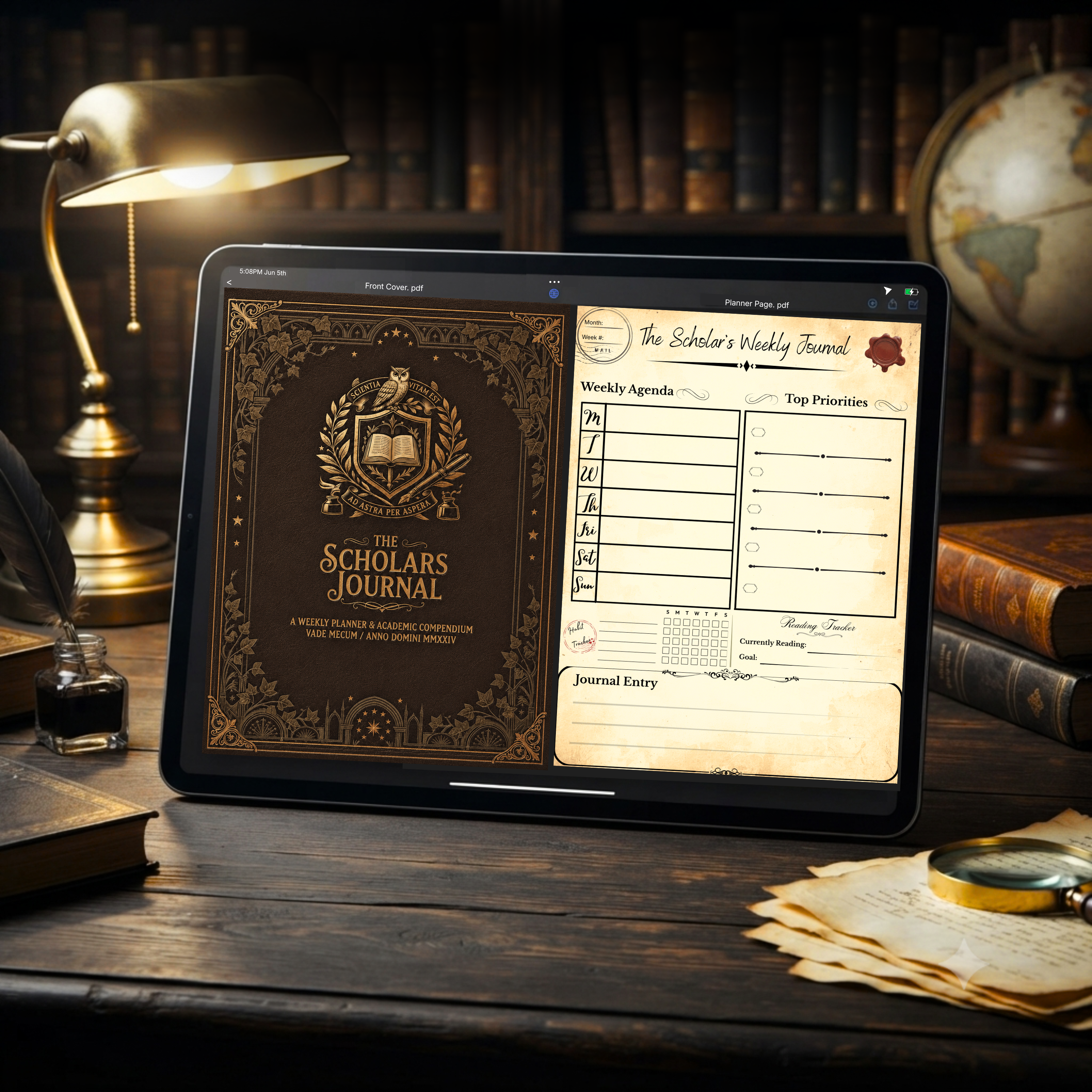
That's when I created the Victorian-inspired weekly planner. Not because Victorian-era journals are trendy. But because they represent something we've lost: intentionality without overwhelm.
Every page is structured to hold what matters:
Your weekly agenda (the essentials, not everything)
Your top priorities (three to five, not twenty)
A habit tracker (the things you actually want to build)
Your reading tracker (what you're actually reading right now)
A journal entry space (to reflect on the week)
All on one page. All in one glance.
What Changed When I Started Using It
The first week, I was skeptical. One page? That seemed too simple. Too small. Surely I was forgetting something important.
But something unexpected happened by Wednesday: I actually remembered what I'd written.
By Friday, I'd completed most of my priorities. Not because I suddenly became more disciplined, but because I'd only written down what was realistic. What mattered. What I actually wanted to do.
The reading tracker was the real shift. Instead of guilt about my towering TBR pile, I wrote down one or two books I was currently reading. I tracked my progress. I felt like I was actually finishing things instead of starting seventeen books at once.
The journal entry space at the bottom became my favorite part. Five minutes on Sunday to reflect on the week ahead. Five minutes on Friday to think about what actually happened. It sounds small, but it created a rhythm. A ritual. Something that felt intentional instead of frantic.
Why This Works (And Why Other Planners Don't)
Most planners fail because they try to be everything. They're designed for people who want to optimize every hour. Batch their emails. Time-block their gym sessions. That's not what thoughtful readers need.
What we need is clarity. Space to breathe. A way to track the things that actually matter, books, priorities, reflections, without feeling like we're failing by Monday morning.
The Victorian-inspired approach works because it strips away the noise. There are no color-coding systems to maintain. No complicated formulas. No guilt about unused sections.
Just a simple structure: What matters this week? What am I reading? What do I want to build? How do I feel about it all?
That's it.
How to Use It
If you're thinking about trying this approach, here's what I'd suggest:
Start with your top three priorities. Not ten. Not five ambitious goals and fifteen micro-habits. Three things that, if you accomplished them, would make the week feel successful.
Write down what you're actually reading. Not what you wish you were reading. Not your entire TBR list. The one or two books currently on your nightstand.
Use the habit tracker for things that matter to you. If morning coffee matters, track it. If reading before bed matters, track it. If journaling matters, track it. Ignore everything else.
Leave space for reflection. Sunday and Friday journal entries take five minutes each. They're not essays. They're snapshots. They remind you that planning isn't about perfection, it's about intention.
It's Not About Being Victorian
Let me be clear: this isn't about romanticizing the past or pretending we live in another era.
It's about remembering that simplicity works. That writing things down by hand creates a different kind of thinking. That the most elegant solutions are often the ones that ask the least of us.
It's about recognizing that you don't need another app. You need permission to do less, choose better, and actually finish the books stacked on your nightstand.
If this resonates with you, I created The Scholar's Weekly Journal, a 52-page undated Victorian-inspired weekly planner designed for readers and thinkers who want to manage their week with intention. It includes a weekly agenda, priorities list, habit tracker, reading tracker, and journal entry space. All on one beautiful page.
Download it → Here
Letters from the reading chair
A monthly note with quiet essays, book recommendations, and small pleasures for the reading life. No noise, ever.